
001|Why Data Clean Rooms Are Essential for Publishers
Exploring the Role of DCRs in Managing and Monetizing Data

Question
In today’s notes on Altruistic Data Collaboration, we reviewed an article published on November 21, 2023, by Lotame’s Chief Growth Officer, Alexandra Theriault [1, 2, 3], titled, “Data clean rooms are not one size fits all. What do you really need?” [4].
Alexandra highlights how publishers and advertisers aim to maximize the value of their respective first-party data, recognizing the growing importance of data collaboration. Data Clean Rooms (DCR) are presented as the ideal solution for publishers to collaborate effectively with advertisers.
DCR technology enables publishers to regain control over their customer data and media revenue. Key features of DCRs that attract publishers include:
Percentage of authenticated traffic from logged-in users
Breadth and depth of first-party data categories
Overall footprint of data per region
With the use of common identifiers, DCRs allow publishers to provide advertisers with as much first-party data as possible, ensuring greater value through collaboration.
The question I have is: Why are these three aspects only achievable through DCRs?
Answer
Data Clean Rooms (DCRs) empower publishers to regain control over their customer data and media revenue by providing mechanisms for secure data processing and privacy protection. Below is an explanation of why these three aspects are feasible only with DCR technology:
1. Percentage of authenticated traffic from logged-in users
Challenge: Tracking the proportion of authenticated traffic while maintaining data accuracy and privacy is complicated, especially when data originates from multiple platforms or devices.
How DCRs Address It: DCRs aggregate data from various sources and analyze it using de-identification techniques. Even when different data sources use separate identifiers, DCRs leverage common identifiers to match and validate data across sources. This ensures publishers can monitor the proportion of authenticated traffic without compromising user privacy.
2. Breadth and depth of first-party data categories
Challenge: Publishers need to manage diverse categories of first-party data, such as user preferences, browsing behavior, and purchasing patterns, but these data types often vary in structure or are siloed across platforms.
How DCRs Address It: DCRs offer standardization and categorization mechanisms that allow first-party data to be integrated and analyzed across different sources. This enables publishers to securely share granular insights with advertisers, facilitating precise ad targeting without violating privacy regulations.
3. Overall footprint of data per region
Challenge: Data accessibility is subject to regional laws (e.g., GDPR, CCPA), and user behavior data is often dispersed across different databases or systems.
How DCRs Address It: DCRs support cross-regional data management and collaboration through built-in compliance workflows. This ensures that data from each region can be used legally, allowing publishers to consolidate their global data assets. Advertisers gain cross-market insights while ensuring compliance with local regulations.
How DCRs Add Value to Data Collaboration
By utilizing DCRs, publishers can maximize the potential of their data while protecting user privacy. DCRs enable the use of common identifiers to match and analyze different datasets, bridging gaps across platforms. This enhances the value of data collaboration, empowering advertisers to conduct more accurate, personalized marketing campaigns, thereby improving ad effectiveness.
Without DCRs, integrating data and managing privacy would present significant challenges, making it difficult to provide both high-quality analytics and compliance at the same time.
Note
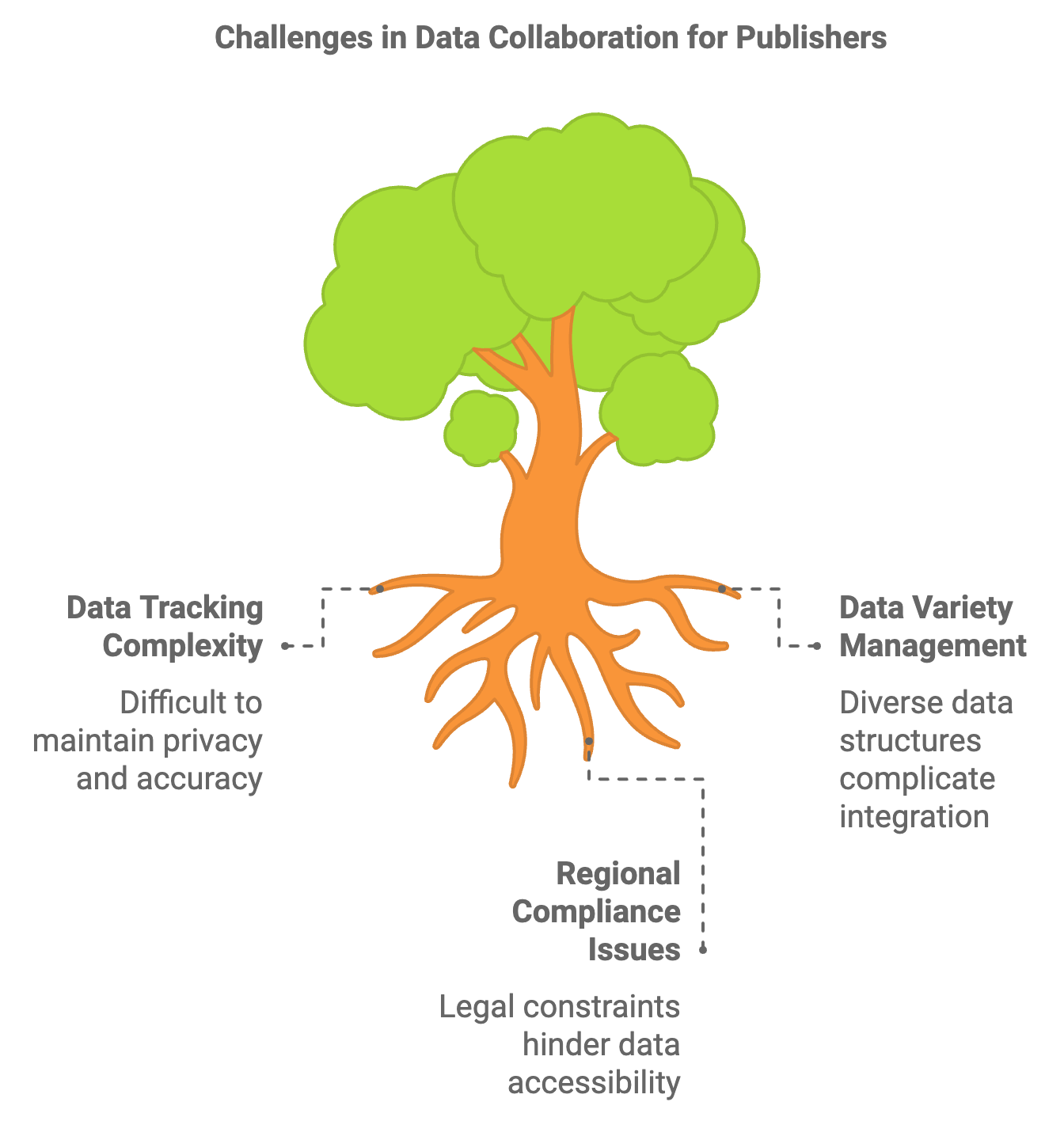
The challenges that DCR technology addresses can be summarized as follows:
Tracking the proportion of authenticated traffic accurately while maintaining privacy requires meticulous data management, especially when data comes from multiple platforms or devices.
Managing a large variety of first-party data—spanning user preferences, browsing behavior, and purchase history—can be complex due to differences in data structure or platform silos.
DCRs facilitate cross-regional data management and collaboration with compliance workflows, enabling publishers to leverage global data assets for advertisers while adhering to local regulations.
Further Question
How can synthetic data technology improve the way these challenges are addressed?
Reference
[1] https://www.lotame.com/
[2] https://x.com/alexktheriault
[3] https://www.linkedin.com/in/alexktheriault/
[4] Data clean rooms are not one size fits all. What do you really need? (https://digitalcontentnext.org/blog/2023/11/21/data-clean-rooms-are-not-one-size-fits-all-what-do-you-really-need/)